What Are Seamless Gutters, and Are They Worth It?
November 13, 2026
Ready Roof installs seamless gutters on homes across Nassau and Suffolk Counties from our base in Bohemia. Owner Ryan Coyne is a third-generation carpenter specializing in roofing and framing, and our own crew forms, hangs, and pitches every gutter we install. We also replace a lot of old sectional gutters, so we see exactly where those systems fail after a few Long Island winters. This guide explains what seamless gutters are, how they are made, and when they are worth the cost.
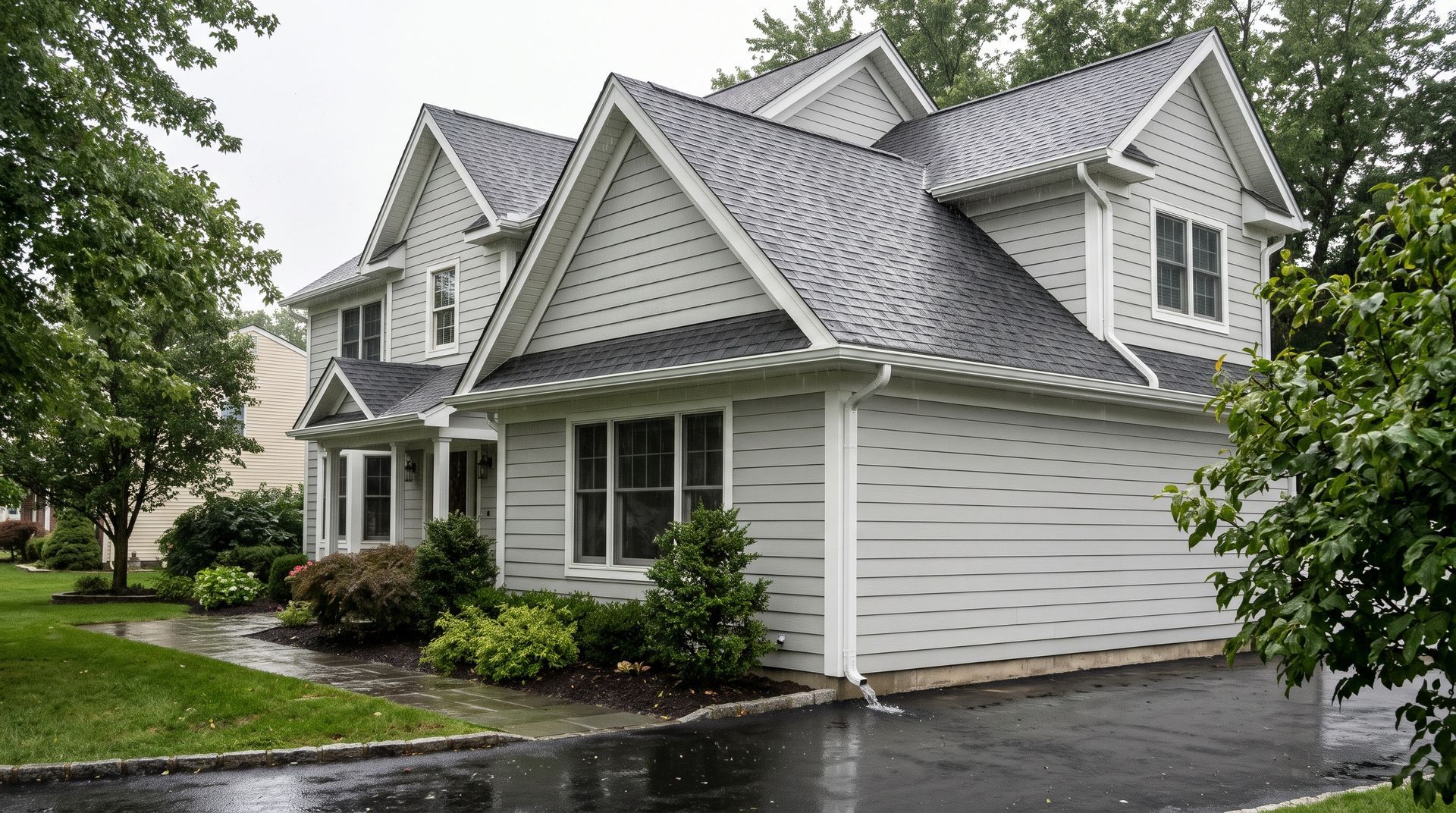
Quick Answer: Seamless gutters are formed on site from a continuous coil of metal, usually aluminum, and cut to the exact length of each run on your house. Instead of joining short sections every 10 feet or so, the only seams are at the corners, end caps, and downspout outlets. Fewer joints means fewer places to leak, sag, or catch debris. For most Long Island homes, seamless aluminum gutters are worth the higher upfront cost compared with sectional gutters, especially on longer runs.
In This Guide
- How Seamless Gutters Are Made: On-site forming.
- Are Your Gutters Sectional?: How to tell.
- Seamless vs. Sectional Gutters: Side-by-side.
- Where Seamless Gutters Still Have Seams: The joints that matter.
- Materials: Aluminum, copper, and steel.
- Sizes and Profiles: 5-inch, 6-inch, and half-round.
- Colors: Matching your exterior.
- Pros and Cons: What to weigh.
- Are They Worth It on Long Island?: When it pays off.
- Long Island Weather: Wind, salt, and ice.
- What Makes an Installation Last: Details that matter.
- Caring for Seamless Gutters: Simple upkeep.
- Get a Seamless Gutter Estimate: Free estimates.
- Frequently Asked Questions: Quick answers.
How Seamless Gutters Are Made
Formed From Coil on Site
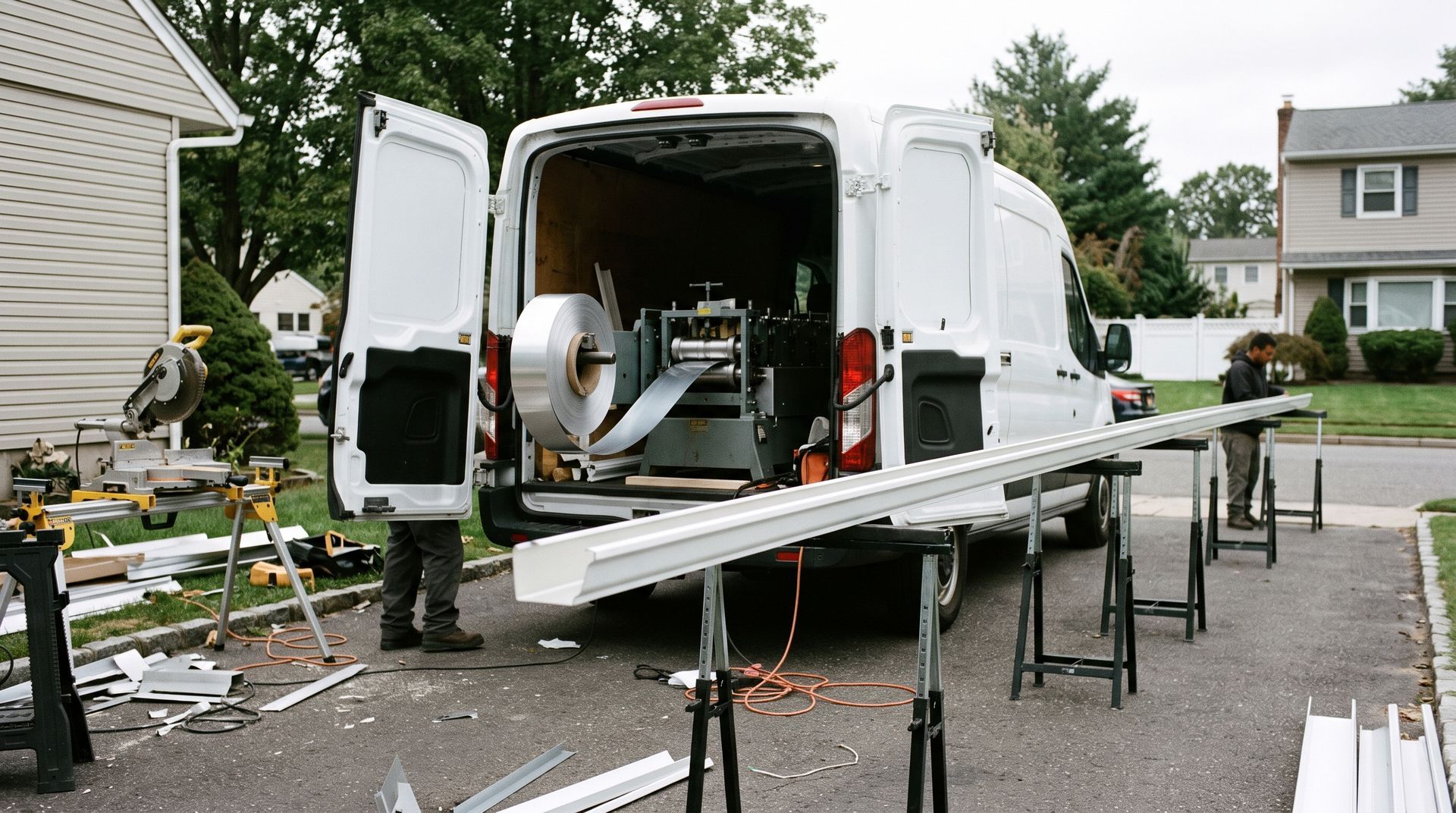
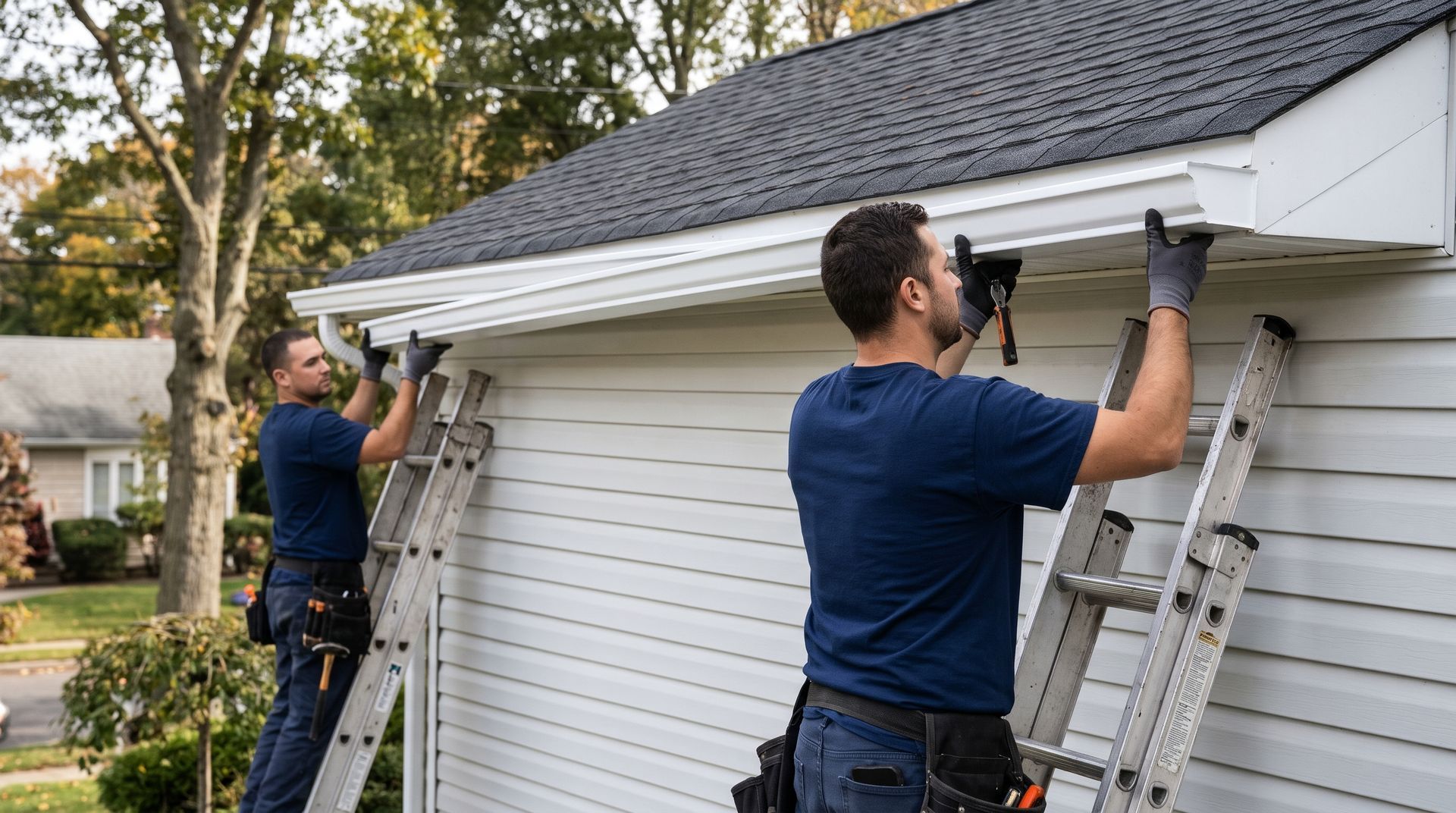
Seamless gutters start as a flat roll of prefinished metal coil. The installer feeds it through a roll-forming machine, usually mounted on a truck or trailer in the driveway, which bends the flat metal into a gutter profile as it comes out. The crew cuts each piece to the exact length measured for that run.
Custom-Fit to the House
Because each section is made for a specific stretch of roofline, a 40-foot run along the back of a colonial can be one continuous piece. Sectional gutters for the same run would need several joints, each one sealed with caulk or connectors.
Installed the Same Day
In most cases, measuring, forming, hanging, and pitching happen in a single visit. The finished gutters are hung on hidden hangers, pitched toward the downspouts, and connected to new or existing downspouts.
How to Tell If Your Current Gutters Are Sectional
Many homeowners are not sure what they have. From the ground or a short ladder, sectional gutters usually show these signs:
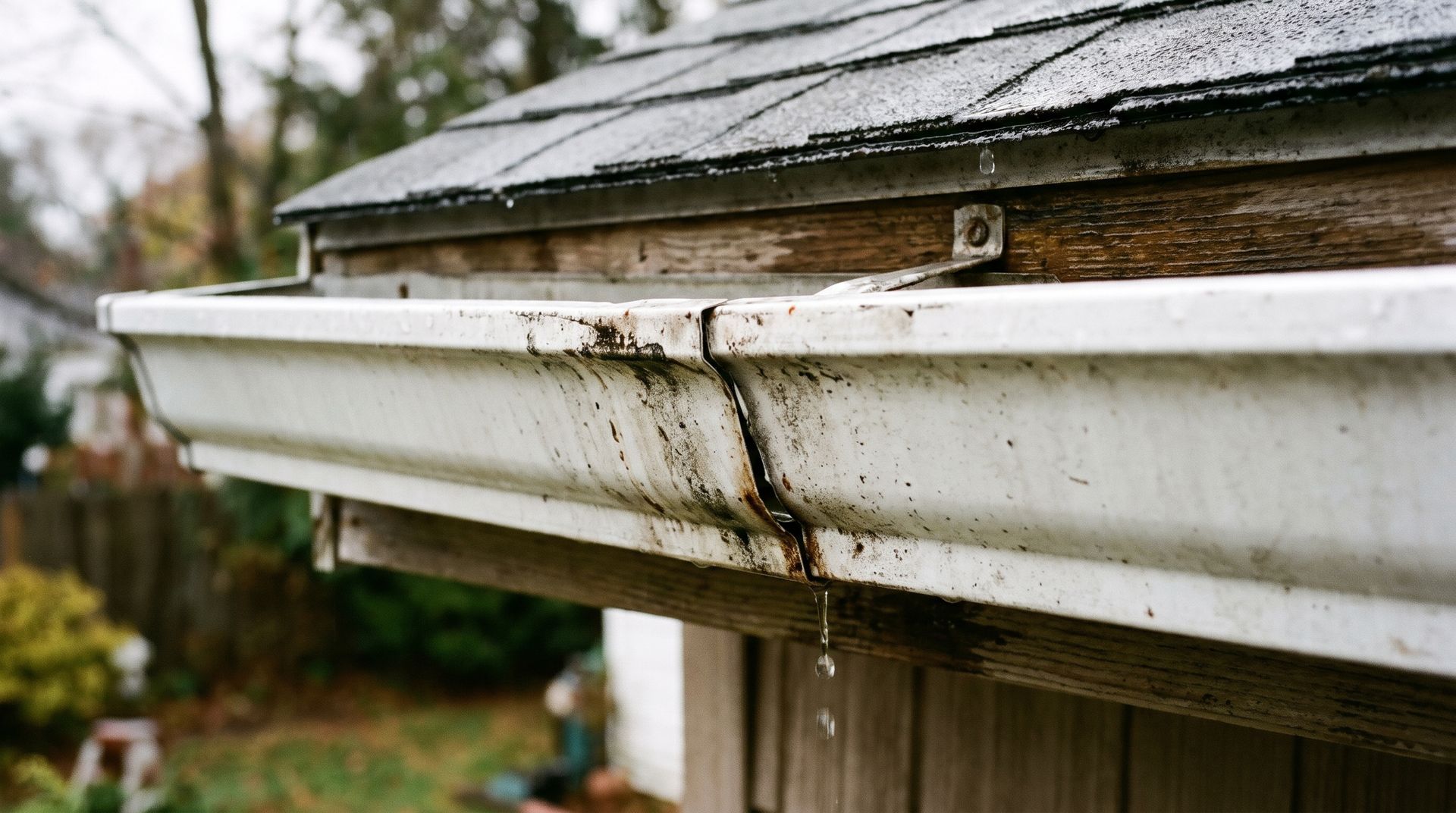
- Visible seams or connector strips every 10 feet or so along a run.
- Rust streaks or dirt lines on the siding directly below the joints.
- Drips from the joints during or after rain, even when the gutter is clean.
- Slightly mismatched color between sections that were replaced at different times.
- Spike-and-ferrule fasteners, long nails driven through the face of the gutter.
- Sagging between joints, where sealant and connectors have loosened.
If you see several of these, the system is likely sectional and nearing the point where repairs stop holding.
Seamless vs. Sectional Gutters
| Feature | Seamless Gutters | Sectional Gutters |
|---|---|---|
| How they are made | Formed on site to the length of each run | Pre-cut lengths joined together |
| Joints along a run | None, except at corners and outlets | A joint every section, often every 10 feet |
| Leak risk | Lower, with fewer joints to fail | Higher, as joint sealant ages |
| Debris catch points | Fewer | More, where joints create ridges |
| Appearance | Clean, continuous lines | Visible seams along each run |
| Installation | Professional, with forming equipment | Can be a DIY project |
| Upfront cost | Higher | Lower |
| Repairs | A damaged run may need a new section | Individual pieces can be swapped |
Why the Joints Matter So Much
On sectional gutters, every joint is held together with sealant that ages, cracks, and loosens with heat, cold, and the weight of water and ice. Those joints are where we find most drips, rust streaks, and soaked fascia when we replace older systems.
Where Seamless Gutters Still Have Seams
"Seamless" does not mean zero joints.
- Inside and outside corners, where two runs meet at a miter.
- End caps, which close off each end of a run.
- Downspout outlets, where the gutter connects to the downspout.
- Downspout elbows and sections, which are assembled pieces.
- Expansion joints on very long runs, where some installers allow for metal movement.
These joints are sealed during installation and are worth checking during routine cleaning. Because there are far fewer of them, any problem is easier to find and fix.
Seamless Gutter Materials
Aluminum
Aluminum is the standard for seamless gutters on Long Island homes. It is light, does not rust, comes prefinished in many colors, and forms easily on site. Heavier-gauge aluminum resists denting from ladders and falling branches better than thin coil.
Copper
Copper can also be formed seamlessly. It lasts a very long time and weathers to a natural patina, which suits historic homes and high-end exteriors. It costs much more than aluminum, and it should only be paired with copper hangers, fasteners, and downspouts. Mixing metals in contact with water speeds up corrosion.
Steel
Steel gutters are strong but heavier, and they can rust once the coating wears through. Near the bays and the ocean, salt air is hard on steel, which is one reason aluminum is the more common choice for coastal homes.
Seamless Gutter Sizes and Profiles
5-Inch K-Style
The most common residential size, with a profile that looks like crown molding from the street. It handles moderate runoff on smaller roofs well.
6-Inch K-Style
A larger gutter that holds noticeably more water and pairs with larger downspouts. We often recommend it for larger or steeper roofs on Long Island, where heavy, wind-driven rain from nor'easters can overshoot smaller gutters.
Half-Round
A rounded profile common on historic homes, often in copper. Half-round gutters can be formed seamlessly with the right equipment, though they are less common than K-style.
Colors and Matching Your Exterior
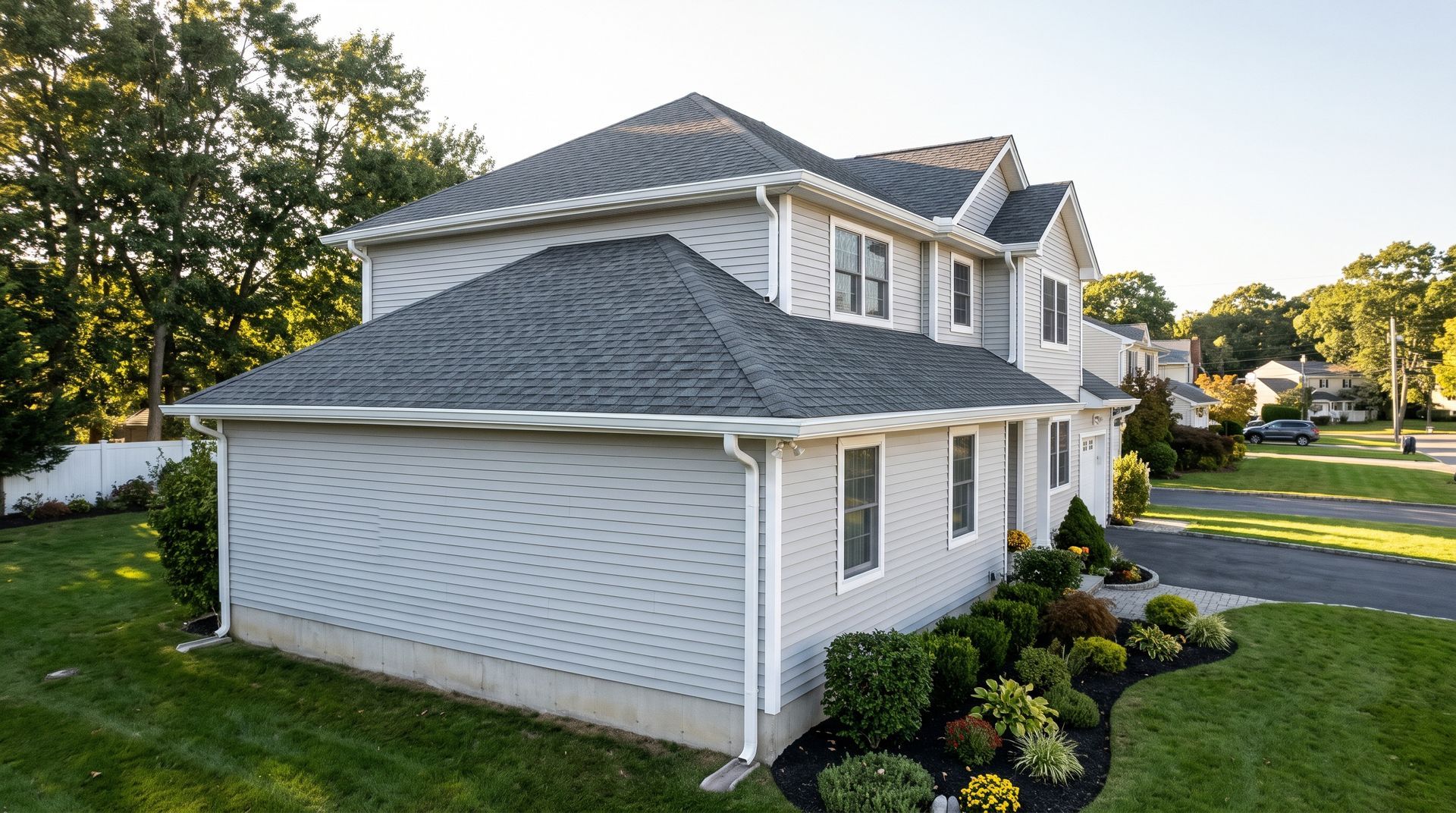
Seamless aluminum coil comes prefinished in a wide range of colors, so the gutter can match the trim, the fascia, or the siding. White and off-white gutters blend with white trim on most Long Island capes and colonials. Darker gutters such as black, bronze, or clay tend to disappear against darker siding and newer architectural shingles. Matching the downspouts to the wall color, rather than the gutter, helps them fade into the house. Because the finish is baked on at the factory, prefinished aluminum gutters do not need painting, though the color can fade slightly over many years of sun.
Pros and Cons of Seamless Gutters
Advantages
The biggest benefit is fewer leaks. With no joints along each run, there are fewer places for water to drip onto fascia, siding, and walkways. Seamless gutters also tend to clog less because there are no seam ridges to snag leaves. They look cleaner, and because they are custom-fit, they follow the roofline closely.
Drawbacks
Seamless gutters cost more upfront than sectional systems and require professional installation. If one long run is badly damaged, the fix may be replacing that whole run rather than one short piece. They also still need regular cleaning. No gutter, seamless or not, stays clear on its own under oaks and pines.
Are Seamless Gutters Worth It on Long Island?
Usually, Yes
For most homes we work on, seamless aluminum gutters pay off in fewer repairs, less fascia rot, and less time spent chasing leaks. The difference is biggest on homes with long, straight runs and on homes that see heavy rain off large roof areas.
When Sectional Gutters Can Make Sense
On a small garage, shed, or a short porch roof, the leak risk from a couple of joints is low, and a sectional gutter may be enough. For a homeowner doing a quick DIY fix on one short run, sectional pieces are also easier to handle.
When Seamless Is Especially Worth It
Seamless gutters make the most sense when you are replacing the roof, when the old gutters leak at multiple joints, when fascia is rotting behind leaky seams, or when you plan to stay in the home long enough to benefit from a system that lasts. For typical price ranges, see our guide to
gutter installation cost on Long Island.
Seamless Gutters and Long Island Weather
Wind and Nor'easters
Strong winds can lift gutters that are loosely attached. Hidden hangers screwed firmly into solid fascia hold the system tight against the house, and closer hanger spacing on exposed walls adds strength where the wind hits hardest.
Salt Air
Near the South Shore bays, the North Shore, and the East End, salt air shortens the life of bare steel and unprotected fasteners. Prefinished aluminum with compatible fasteners holds up well in those conditions.
Snow and Ice
A gutter full of ice is heavy. Secure hangers, sound fascia, and a correct pitch so water does not sit and freeze in the trough all reduce the risk of sagging or pulling away in winter.
Expansion and Contraction
Aluminum expands in summer heat and shrinks in winter cold. On very long runs, installers plan for that movement so corners and outlets are not stressed every season.
What Makes a Seamless Gutter Installation Last
Sound Fascia
Gutters should never be hung on soft or rotted fascia. Hangers lose their grip, the pitch changes, and water ends up behind the gutter. Our roof fascia repair page explains that repair.
Hidden Hangers at the Right Spacing
Hidden hangers screwed securely through the gutter into the fascia hold the system much better than old spike-and-ferrule fasteners, especially under snow and ice.
Correct Pitch
Each run should fall gently toward its downspout. Too flat and water sits in the trough. Too steep and the gutter looks crooked from the street.
Drip Edge Into the Gutter
The drip edge along the roof edge should direct water into the gutter, not behind it. Our article on whether gutters can cause roof leaks shows what happens when this detail is missed.
Enough Downspouts
Long runs need more than one downspout, and large roof areas may need larger ones. A well-formed gutter with too few downspouts still overflows.
Caring for Seamless Gutters
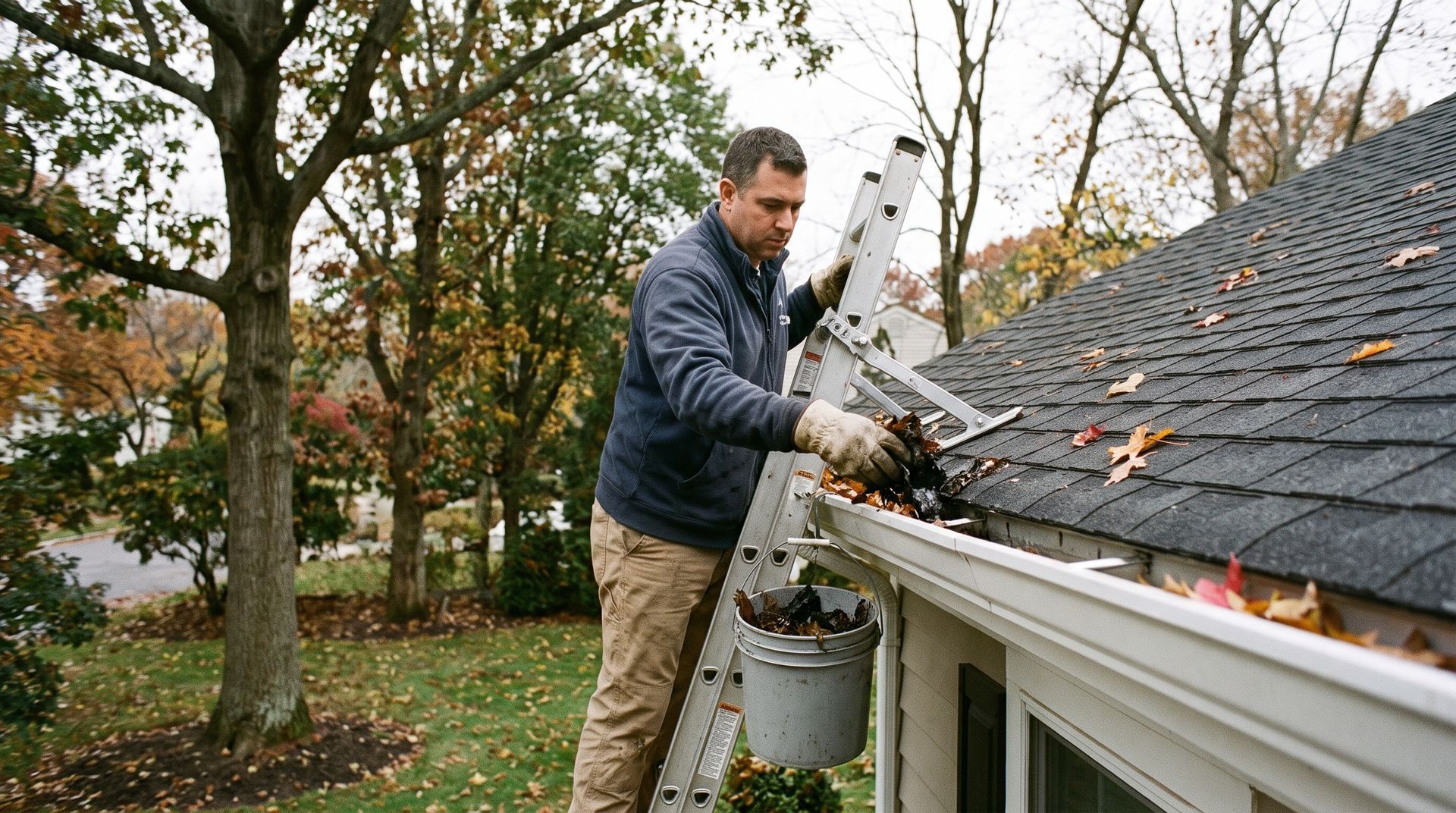
Seamless gutters need less upkeep than sectional systems, but they are not maintenance-free. Clean them at least twice a year, and more often under oaks, maples, or pines. During cleaning, check the corners, end caps, and downspout outlets, since those are the joints most likely to need resealing over time. Flush each downspout to make sure water is flowing freely. Our guide on
how often to clean gutters explains how tree cover changes the schedule.
Get a Seamless Gutter Estimate
Our gutter installation, repair, and replacement service includes on-site forming of seamless aluminum gutters, fascia repair, downspouts, and guards. If you are unsure whether your home needs gutters at all, our guide on whether gutters are necessary walks through it.
We serve homeowners throughout Long Island, including
Bohemia,
Ronkonkoma,
Hauppauge,
Commack, and
Lindenhurst. Call Ready Roof at (631) 705-8817 or
contact us online for a free estimate.
Frequently Asked Questions
What is the difference between seamless and regular gutters?
Seamless gutters are formed on site to the length of each run, so they have no joints except at corners and downspout outlets. Regular sectional gutters are pre-cut lengths joined together, with a seam at every connection.
Do seamless gutters leak?
They can leak at corners, end caps, and downspout outlets, but with far fewer joints than sectional gutters, leaks are much less common and easier to fix.
How long do seamless gutters last?
Quality aluminum seamless gutters commonly last 20 to 30 years with proper installation and regular cleaning. Copper can last much longer.
Can seamless gutters be repaired?
Yes. Corners, outlets, and hangers can be resealed or replaced. A run with major damage may need to be re-formed and replaced as one piece.
Are seamless gutters better for heavy rain?
They handle heavy rain well because there are no joints to leak along each run. Size matters too, so larger roofs often need 6-inch seamless gutters and larger downspouts.
Recent Posts