The Roof Repair Process: From Inspection to Final Repair
September 1, 2026
A professional roof repair follows a straightforward path: a thorough inspection, diagnosis of the exact problem and its source, a written estimate, the repair itself, and a final cleanup and check. Most repairs are completed in a few hours to a single day, depending on what is wrong and where it is on the roof. Catching a problem early almost always keeps the repair small.
At Ready Roof, we repair roofs across Long Island, from Nassau County to Suffolk County. Owner Ryan Coyne brings a legacy of craftsmanship that spans three generations, and our licensed and insured team focuses on finding the true source of a problem, not just the symptom. This guide explains how a real roof repair unfolds from start to finish.
In This Guide
- When Do You Need a Roof Repair?: The signs worth acting on.
- The Roof Repair Process Step by Step: How the work unfolds.
- Common Roof Repairs and What They Involve: The most frequent fixes.
- How Long Does a Roof Repair Take?: Realistic timelines.
- Repair or Replace?: How to decide.
- What Roof Repairs Typically Cost: What drives the price.
- How to Prevent Future Roof Damage: Keeping repairs rare.
- Frequently Asked Questions: Quick answers for homeowners.
When Do You Need a Roof Repair?
A roof repair addresses a specific, isolated problem before it spreads into something larger. The most common triggers are a leak, missing or damaged shingles after a storm, damaged flashing around a chimney or vent, or a sagging or rotted section of fascia.
The key with any of these is not to wait. A small issue like a cracked flashing seal or a few lifted shingles is inexpensive to fix now, but left alone through a Long Island winter it can let water into the decking, insulation, and ceilings. Our guide to
the signs your roof needs repair covers what to watch for before small problems turn expensive. Water stains on a ceiling, granules collecting in your gutters, daylight visible in the attic, and shingles scattered in the yard after a storm are all cues that it is time to call for an inspection rather than wait and see.
The Roof Repair Process Step by Step
A quality repair is methodical, because fixing what you can see without finding the real source often means the problem comes back. Here is how the process works from the first call to the finished repair.
- Inspection. We examine the roof thoroughly, inside the attic and out on the surface, to assess the overall condition and pinpoint problem areas rather than guessing from the ground.
- Diagnosis and source-tracing. Because water travels before it drips, we trace a leak or issue back to its actual entry point, which is often several feet from where the damage shows inside. This step is what separates a lasting repair from a temporary patch, since sealing the visible stain without finding the real source usually means the leak returns with the next heavy rain.
- Written estimate and approval. We explain what we found, what the repair involves, and provide a clear estimate so you can approve the work with full understanding of the scope.
- The repair itself. The crew completes the fix, whether that is replacing shingles, resealing or replacing flashing, repairing decking, or addressing the specific source of a leak.
- Cleanup. All debris and stray nails are removed from the roof and the ground around your home so the site is left clean.
- Final inspection. We review the completed repair to confirm it is watertight and done correctly before considering the job finished.
| Inspection and diagnosis | Roof and attic checked, source traced | Same visit |
|---|---|---|
| Estimate and approval | Findings explained, scope and price set | Before repair |
| Repair and cleanup | Fix completed, debris and nails removed | A few hours to a day |
Common Roof Repairs and What They Involve
Most repairs fall into a handful of categories. Knowing what each involves helps you understand your estimate and what the crew will actually be doing on your roof.
Shingle Replacement
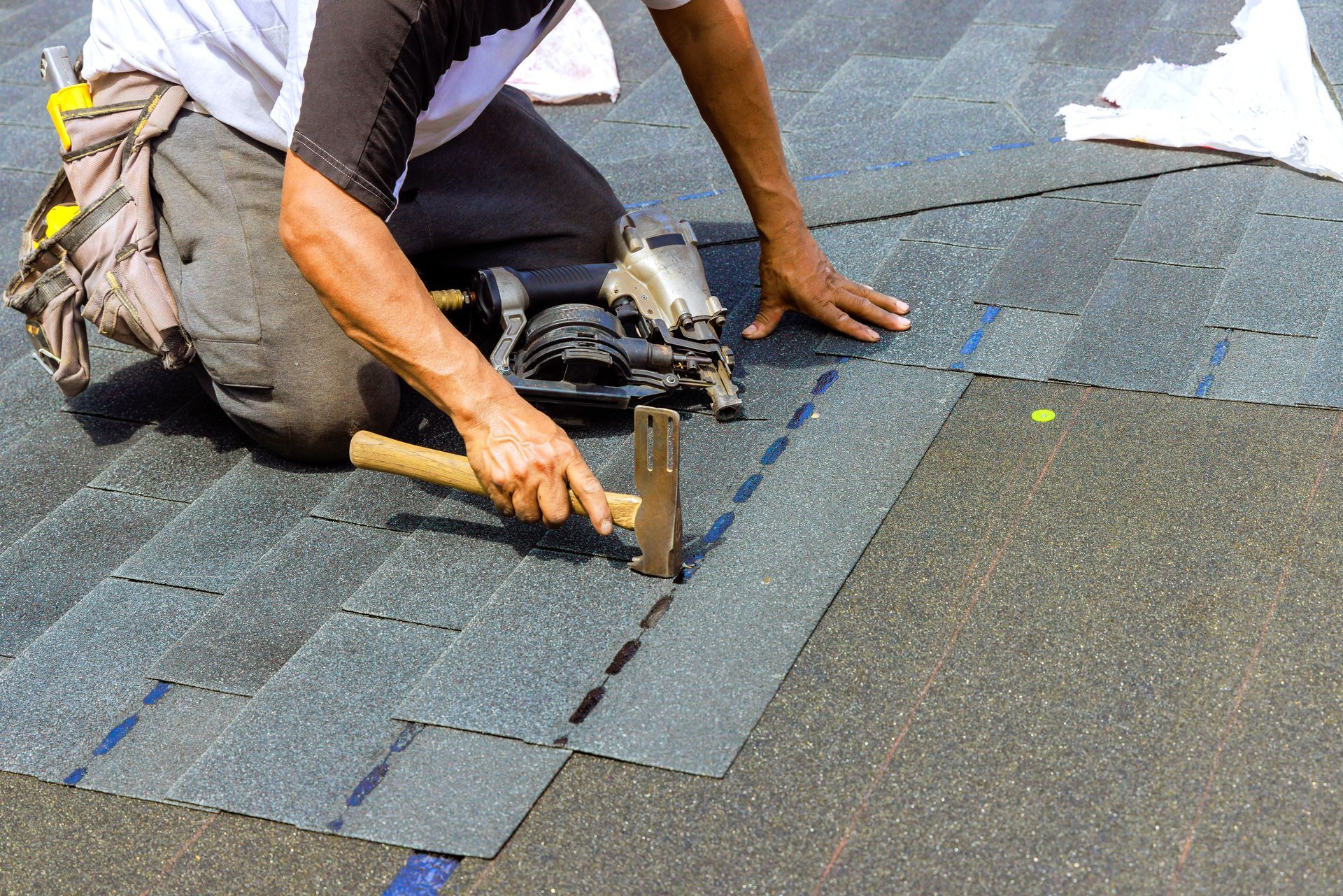
Missing, cracked, or curled shingles are among the most common repairs, especially after a storm. The damaged shingles are removed and replaced with matching ones, and the surrounding area is checked to make sure water has not already gotten underneath.
Flashing Repair
Flashing seals the joints where the roof meets a chimney, wall, or valley, and it is a frequent leak source. Repair means resealing or replacing the metal so those transitions are watertight again, which is central to our chimney flashing work.
Leak Repair
A leak repair starts with finding the true entry point, then sealing or replacing whatever failed, from a cracked vent boot to lifted shingles or bad flashing. The fix is only as good as the diagnosis, which is why source-tracing matters so much. In some cases a single leak has more than one contributing point, so a careful roofer checks the whole area around the entry rather than stopping at the first thing they find.
Fascia and Structural Repair
Rotted or damaged fascia, the board along the roof edge, is repaired or replaced to protect the roofline and gutters. Our
roof fascia repair addresses this before the damage spreads to the structure behind it.
How Long Does a Roof Repair Take?
Most roof repairs are completed within a few hours to a single day. A straightforward fix like replacing a small section of shingles or resealing a piece of flashing is often done in a couple of hours, while more involved repairs, such as tracing a stubborn leak or replacing damaged decking and fascia, can take most of a day.
The main variables are the type and extent of the damage, the location on the roof, and the weather. Repairs, like replacements, need dry conditions to be done safely and correctly, so a rainy stretch can push the appointment. For an active leak, we treat the situation with urgency because every storm makes the damage worse. Access also plays a role: a repair high on a steep roof or in a hard-to-reach valley takes longer to set up safely than one near the eaves, even when the fix itself is simple.
Repair or Replace?
Not every problem is a repair. When damage is widespread, the roof is near the end of its lifespan, or repairs keep recurring in the same areas, replacement is often the more sensible investment. A single leak on an otherwise sound, relatively young roof is a clear repair, while a roof that leaks in multiple places and has been patched repeatedly is telling you something.
If you are weighing the two, our guide on
roof repair versus replacement breaks down the decision, and our overview of
the roof replacement process explains what that larger project looks like. When in doubt, an inspection gives you a straight answer. A good roofer will tell you when a repair is the smart, economical choice rather than pushing a replacement you do not need, and that kind of straight guidance is worth looking for when you choose who works on your roof.
What Roof Repairs Typically Cost
Repair costs vary widely because the word covers everything from swapping a few shingles to tracing a hidden leak and replacing decking. That is why any single number is misleading until a roofer has seen the problem. Still, it helps to understand what drives the price.
A minor repair, such as replacing a small run of shingles or resealing a piece of flashing, sits at the lower end. Costs climb with the complexity and location of the damage, the height and pitch of the roof, the materials involved, and whether the underlying decking is affected. An emergency or storm-damage call can also carry a premium for the urgency. Because early repairs are almost always cheaper than the water damage a delay causes, catching a problem quickly is the best way to keep costs down. For local context, our guide to
roof repair cost on Long Island walks through the factors in more detail, and an on-site estimate gives you an accurate figure for your roof.
How to Prevent Future Roof Damage
The best repair is the one you never need. A little routine attention catches small problems before they become the leaks and structural issues that require bigger fixes.
- Have your roof inspected periodically, ideally once or twice a year and after major storms, so damage is found early.
- Keep gutters clean, since clogged gutters back water up under the roof edge and are a common cause of leaks.
- Trim overhanging branches that drop debris and can scrape or puncture shingles in high wind.
- Check the attic for signs of moisture like stains or a musty smell, which often reveal a leak before it shows on the ceiling.
- Address small issues promptly, because a single lifted shingle or cracked flashing seal is cheap to fix now and expensive to ignore.
Staying ahead of these is especially worthwhile on Long Island, where storm season and coastal weather are hard on roofs and turn small openings into leaks quickly.
Get a Reliable Roof Repair With Ready Roof
A roof problem rarely improves on its own, and the fastest way to keep a small issue small is to have it looked at by a team that finds the real source. Our licensed crew diagnoses and repairs roofs across Nassau and Suffolk County, and leaves your property clean.
Call Ready Roof at (631) 892-9165 or
contact us to schedule an inspection. Learn more about our
roof repair services throughout Long Island.
Frequently Asked Questions
How long does a roof repair take?
Most roof repairs are completed in a few hours to a single day. Minor fixes like replacing a small section of shingles or resealing flashing are often done in a couple of hours, while tracing a difficult leak or repairing decking and fascia can take most of a day. The type and location of the damage and the weather are the main factors.
How do professionals find the source of a roof leak?
Because water travels along the roof structure before it drips, professionals trace a leak from where it appears inside back to its true entry point on the roof, which is often several feet away. This usually involves inspecting the attic and the roof surface and checking the common culprits like flashing, vent boots, and lifted shingles. Finding the real source is what makes the repair last.
Is it worth repairing an old roof?
It depends on the roof's age and overall condition. Repairing an isolated problem on a roof with years of life left is well worth it, but repeatedly repairing a roof near the end of its lifespan often costs more over time than replacing it. A professional inspection, and comparing repair versus replacement, helps you make the call that saves money in the long run.
Can a roof be repaired in the rain?
Roof repairs need dry conditions to be done safely and correctly, so most work waits for clear weather. For an active leak during a storm, a roofer can often perform a temporary emergency measure to limit water intrusion, with the permanent repair completed once conditions allow. Rushing a repair in the rain tends to produce a fix that does not hold.
What is the difference between a roof repair and a roof replacement?
A repair addresses a specific, isolated problem, such as a leak or a few damaged shingles, while a replacement removes the entire roof and installs a new system. Repairs are faster and less expensive and make sense for localized issues on a sound roof, while replacement is the better investment when damage is widespread or the roof is near the end of its life.
Recent Posts