Roof Storm Damage: What to Check After Severe Weather
September 7, 2026
Quick answer: What you should look for depends on which kind of storm just went through. Nor'easter damage shows up as water inside the house with the shingles still intact. Summer thunderstorm wind damage shows up at the rakes and eaves as lifted or missing tabs. Tropical remnants combine both and add debris impact. Winter storms leave their damage at the eaves in the form of ice dam backup. Hail exists on Long Island but is far less common than the generic checklists assume, so hunting for hail bruising after a windstorm wastes your time.
Ready Roof has been on Long Island roofs through nor'easters, tropical remnants, and heavy wet snow, from Bohemia and Ronkonkoma out to the East End. This guide is organized by the storm you actually had, because the damage signature is different every time and so is the urgency.
Before anything else: stay off the roof. Wet shingles, loose debris, and downed lines make post-storm roof climbing one of the more dangerous things a homeowner can do. Everything below can be checked from the ground, a window, or your attic.
In This Guide
- Match the damage to the storm
- Nor'easter damage
- Thunderstorm and straight-line wind damage
- Tropical storm and hurricane remnants
- Winter storm, snow, and ice damage
- Hail, and why it is usually not your problem here
- Coastal salt exposure
- What to do in the first 48 hours
- Get a post-storm inspection
- Storm damage FAQs
Match the damage to the storm
Before you start looking, know what you are looking for. The same roof fails differently depending on what hit it, and the urgency is not the same either.
| Storm type | Where damage shows up | How fast to act |
|---|---|---|
| Nor'easter | Interior stains with shingles intact, north and east slopes, flashing and vents | Same week, sooner if water is active |
| Thunderstorm wind | Rake and eave edges, ridge caps, broken seals, tabs in the yard | Within a week, before the next rain |
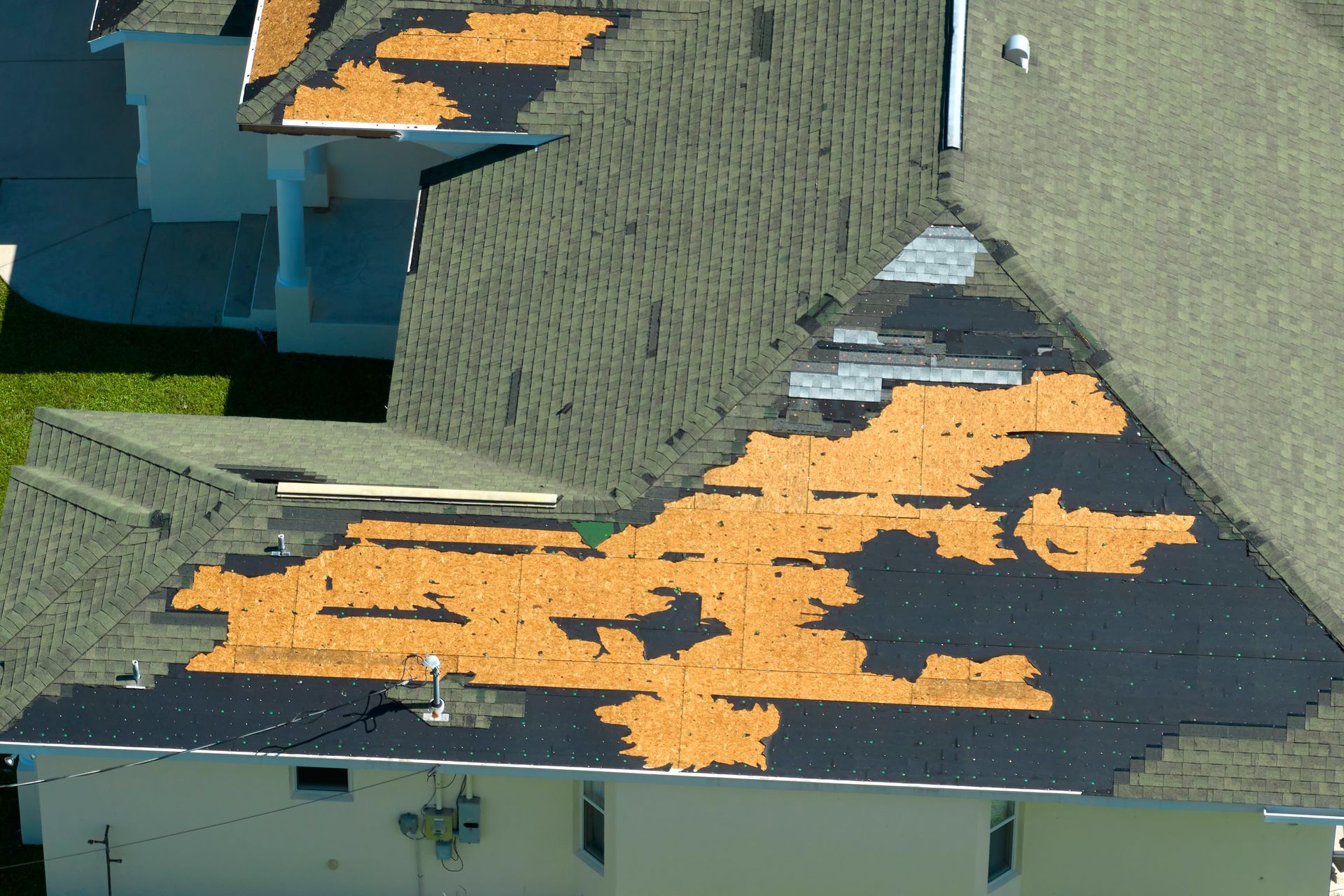
| Tropical remnant | All of the above plus limb impact and ponding on low-slope sections | Immediately if the deck is exposed |
| Snow and ice | Lower two to three feet of the slope, top of exterior walls, icicle-heavy eaves | Before the next thaw-freeze cycle |
| Hail | Granule-scrubbed circles, dents in gutter aprons and vent hoods | Within the claim window, verify it first |
Nor'easter damage
Nor'easters are Long Island's signature roof event, and they are the one storm type the national checklists get wrong. The defining feature is not wind speed. It is the angle.
A nor'easter drives rain from the northeast, often for 12 to 36 hours, at a low angle that pushes water sideways and uphill. Shingles shed water running down. They do not stop water being forced up under the tabs, behind step flashing, or through the ventilation openings on the windward side.
What that looks like
The classic nor'easter call we get is a homeowner reporting a ceiling stain with a roof that looks completely fine from the street. Check these:
- North and east-facing slopes first. Damage concentrates on the windward side, which on Long Island is usually the same elevation every time.
- Chimney and wall intersections. Wind-driven water finds aging step flashing and any spot where counterflashing has pulled from the mortar joint.
- Around ridge vents and gable vents. Sustained wind-driven rain can push water through vent baffles that handle ordinary rain without trouble.
- Skylight perimeters. Skylight flashing kits are the weak point on any roof in a sustained northeast blow.
- Interior corners and the top of exterior walls. Nor'easter water often enters high and shows up low, well away from the actual entry point.
If the leak appears only during a nor'easter and never in an ordinary summer downpour, that tells us a lot. It points to a wind-driven entry path rather than a hole, and those are usually flashing and detailing repairs rather than a full replacement.
Thunderstorm and straight-line wind damage
Summer convective storms hit fast with a short burst of high wind, and the damage is mechanical rather than water-driven.
Wind does not peel a roof from the middle. It gets under an edge and works inward, so almost all of it starts at the perimeter. From the ground, look at:
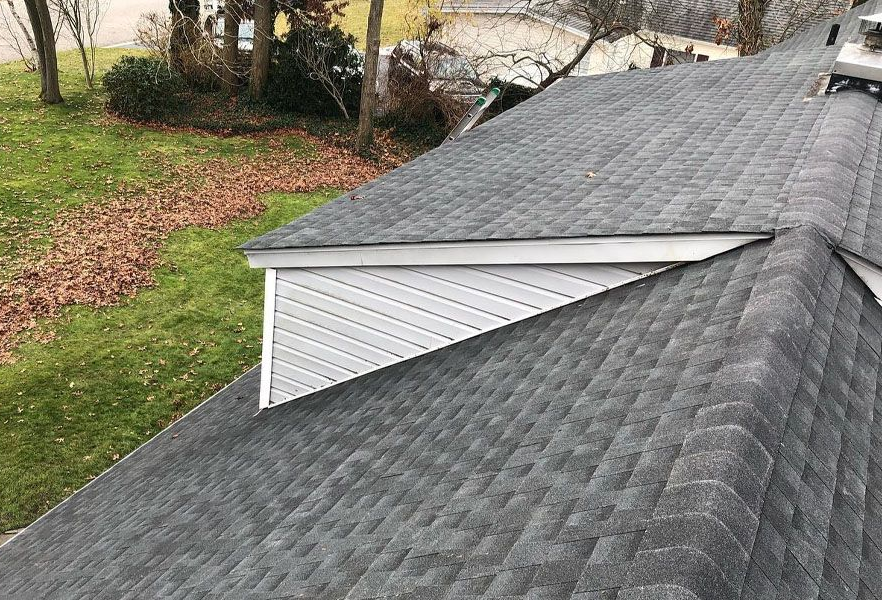
- Rake edges and eaves for tabs that are lifted, curled back, or gone entirely.
- The lawn and the neighbor's yard for shingle pieces. Finding tabs on the ground means the roof lost its seal somewhere, even if you cannot see the gap.
- Ridge caps, which are the most exposed shingles on the roof and often the first to go.
- Gutters and downspouts pulled loose from the fascia, plus gutter aprons bent up.
- Siding and window screens on the windward wall, which tells you the wind direction and where to focus on the roof.
The damage people miss after a wind event is the shingle that is still in place but no longer sealed. The adhesive strip breaks, the tab lays back down, and it looks normal until the next storm lifts it. This is why a wind event with no visible missing shingles still deserves a look, especially on a roof over 12 years old, where the sealant has hardened and does not re-bond.
Tropical storm and hurricane remnants
By the time a tropical system reaches Long Island it is usually a remnant or a post-tropical storm, which does not make it gentle. You get nor'easter-style duration, thunderstorm-style gusts, and debris.
Work through the nor'easter and wind lists above, then add:
- Tree and limb impact. Look for a punctured or cracked plane, dented ridge vent, and scuffed areas where a branch dragged across the shingles and stripped granules in a line.
- Standing water on flat sections. Porch and addition roofs with low slope can pond when the drains clog with leaves during the storm. Ponding on a flat roof is a separate problem worth addressing on its own, which we cover in common flat roof problems in Nassau and Suffolk homes.
- Gutter overflow marks. Streaking down the siding or a washed-out trench in the mulch under the eaves shows the gutters could not keep up, which sends water behind the fascia. Overflowing gutters can absolutely cause roof leaks, as we explained in can gutters cause roof leaks.
Winter storm, snow, and ice damage
Winter damage happens at the eaves, and it comes from heat, not from the storm.
Snow on a warm roof melts from underneath, runs down, and refreezes at the cold overhang where there is no heated space below. That ridge of ice grows, backs water up behind it, and that water sits against the shingles until it finds a way under them. That is an ice dam, and it is a ventilation and insulation problem showing up as a roof problem.
Where to look after a snow event
Check the interior first, because ice dam water announces itself indoors before you can see anything outside. Look for staining along the top of exterior walls, in the corners of upstairs rooms, and around window headers on the north side.
Outside, from the ground, note where icicles form. Heavy icicles on one section of eave and none on another points to a specific heat leak in the attic below that spot, often a bathroom fan vented into the attic, a can light, or insulation that got pushed away from the top plate.
Heavy wet snow also adds load. A well-framed Long Island roof handles our snow, but sagging between rafters, doors that suddenly stick upstairs, or new cracks at drywall corners after a big storm are worth a same-week call.
Hail, and why it is usually not your problem here
Nearly every storm damage article you will read is written for the hail belt, where adjusters count strikes inside a ten-by-ten test square to decide a claim. Long Island does get hail, but rarely at the size and frequency that damages asphalt shingles.
If you did have a genuine hail event, the tells are dark circular spots where the granules scrubbed off, dents in soft metals such as gutter aprons, vent hoods, and the tops of downspouts, and bruising you can feel as a soft spot when pressed. Soft metal dents are the useful check, because they confirm the hail was large enough to matter.
The reason this section matters: a storm chaser who knocks on your door after a windstorm and tells you that you have extensive hail damage is describing a storm you probably did not have. That is the most common post-storm scam on Long Island, and it usually arrives with a clipboard and an out-of-state plate.
Coastal salt exposure
This one is not a single storm, it is cumulative, and it only affects homes near the water. Onshore wind carries salt aerosol inland, and it goes after metal rather than shingles.
On South Shore and East End homes we regularly find corroded roofing nails backing out, rusted drip edge and gutter aprons, pitted step flashing, and deteriorated vent hoods on roofs whose shingles still look serviceable. Salt is also why a repair on a coastal roof should use appropriate fasteners rather than whatever is on the truck.
If your house is within a mile or two of the bay or ocean, add the metal components to your post-storm check. That is where your roof ages first.
What to do in the first 48 hours
Order matters here, mostly because of insurance.
- Document immediately. Photograph the roof from the ground on all four sides, the yard debris, the gutters, the siding, and every interior stain. Photos taken the same day carry more weight with an adjuster than photos taken three weeks later.
- Stop active water. Move belongings, put a bucket under an active drip, and if the ceiling is bulging, a small relief hole controls where the water lands instead of letting it spread across the drywall.
- Get it dried in. A properly installed tarp over exposed decking prevents the second and larger loss. That is emergency work, not a repair. We handle emergency roof repair on Long Island for exactly this window.
- Get an independent inspection before you sign anything. A contractor's written assessment gives you a document to hold up against an adjuster's first offer.
- Open the claim. Policies have notice deadlines, and wind and named-storm deductibles often differ from your standard deductible, so read that page before you assume the number.
- Do not authorize permanent repairs until the scope is settled, unless it is the emergency dry-in.
Get a post-storm inspection
If a storm just went through and you are not sure whether your roof took damage, we will come look and tell you. Sometimes the answer is that your roof is fine and the stain is condensation, and that is a useful answer too.
Call Ready Roof at
(631) 892-9165 or
request an inspection. If you want the service side of this, including insurance documentation and claim support, see our
storm damage roof repair services. To get ahead of the next one, our guide on
preventing roof leaks before storm season covers what we check in advance.
Storm damage FAQs
How soon after a storm should I have my roof inspected?
Within a week for a significant wind or nor'easter event, sooner if you see water inside. The reason is documentation: the link between the storm and the damage gets harder to establish the longer you wait, and insurers push back on delayed claims.
Can a roof be damaged if no shingles are missing?
Yes, and this is the most common situation we find. Wind breaks the adhesive seal without removing the tab, and wind-driven rain gets past flashing without disturbing a single shingle. Both leak on the next storm, not this one.
Will insurance cover my roof after a storm?
Sudden damage from a covered event is generally claimable. Wear, age, and deferred maintenance are not. Older roofs are increasingly settled on an actual cash value basis, meaning depreciation is subtracted, so the payout on a 20-year-old roof may be well below replacement cost.
Should I let the roofer who knocked on my door inspect it?
Be careful. Legitimate local contractors do canvas after big storms, but so do storm chasers who describe damage you do not have and disappear after the check clears. Verify the company is local, licensed, and insured, and never sign a contract that assigns your insurance benefits to a contractor you just met.
Is a tarp enough to protect my roof until repairs?
For days or a couple of weeks, if it is installed correctly and fastened above the damage rather than draped over it. It is a temporary measure. Tarps fail in the next high wind, which on Long Island is rarely far away.
Recent Posts