Roof Replacement on Long Island, NY
September 28, 2026
A full roof replacement on Long Island generally runs $500 to $900 per square for architectural asphalt, which works out to about $5 to $9 per square foot installed. On a typical 20-square house that lands between $10,000 and $18,000, and most Nassau and Suffolk homeowners end up in the middle of that band once tear-off, decking repairs, and permits are included.
Ready Roof is a licensed and insured roofing contractor based at 91 Knickerbocker Avenue in Bohemia, serving all of Long Island from Nassau County through the East End. Owner Ryan Coyne is the third generation in his family to do this work, trained in carpentry and framing by his father, uncle, and grandfather, which is why our crews treat the deck and the framing as part of the roof rather than as whatever is hiding under the shingles.
Call
(631) 892-9165 or email quotes@readyroofli.com for an estimate.
What a roof replacement costs here
Roofing is priced by the square, which is 100 square feet of roof area. Your house's footprint is not your roof area, because pitch and overhangs add to it, so a 1,800 square foot ranch often measures out around 22 to 24 squares.
| Material | Installed cost per sq ft | Realistic lifespan on Long Island |
|---|---|---|
| Architectural asphalt shingles | $5 to $9 | 25 to 30 years |
| Standing seam or metal panel | $10 to $16 | 40 to 50 years |
| Cedar shake | $12 to $20 | 25 to 35 years, more upkeep near the water |
| Slate or tile | $20 and up | 50 years and beyond |
Architectural asphalt is what goes on the large majority of Long Island homes, and for good reason: it handles nor'easter wind with the right nailing pattern, it is repairable, and the price per year of service is hard to beat. Metal makes sense on low-slope sections, modern designs, and houses where the owner plans to stay for decades.
What drives your number up or down
Two houses with the same square footage can be thousands apart. Here is what actually moves an estimate:
- Pitch and roof complexity. Steep slopes need staging and slow the crew down. Every valley, dormer, hip, and skylight is cutting, flashing, and labor rather than open field shingling.
- How many layers come off. One layer of tear-off is standard. Two layers means double the disposal weight and dumpster cost.
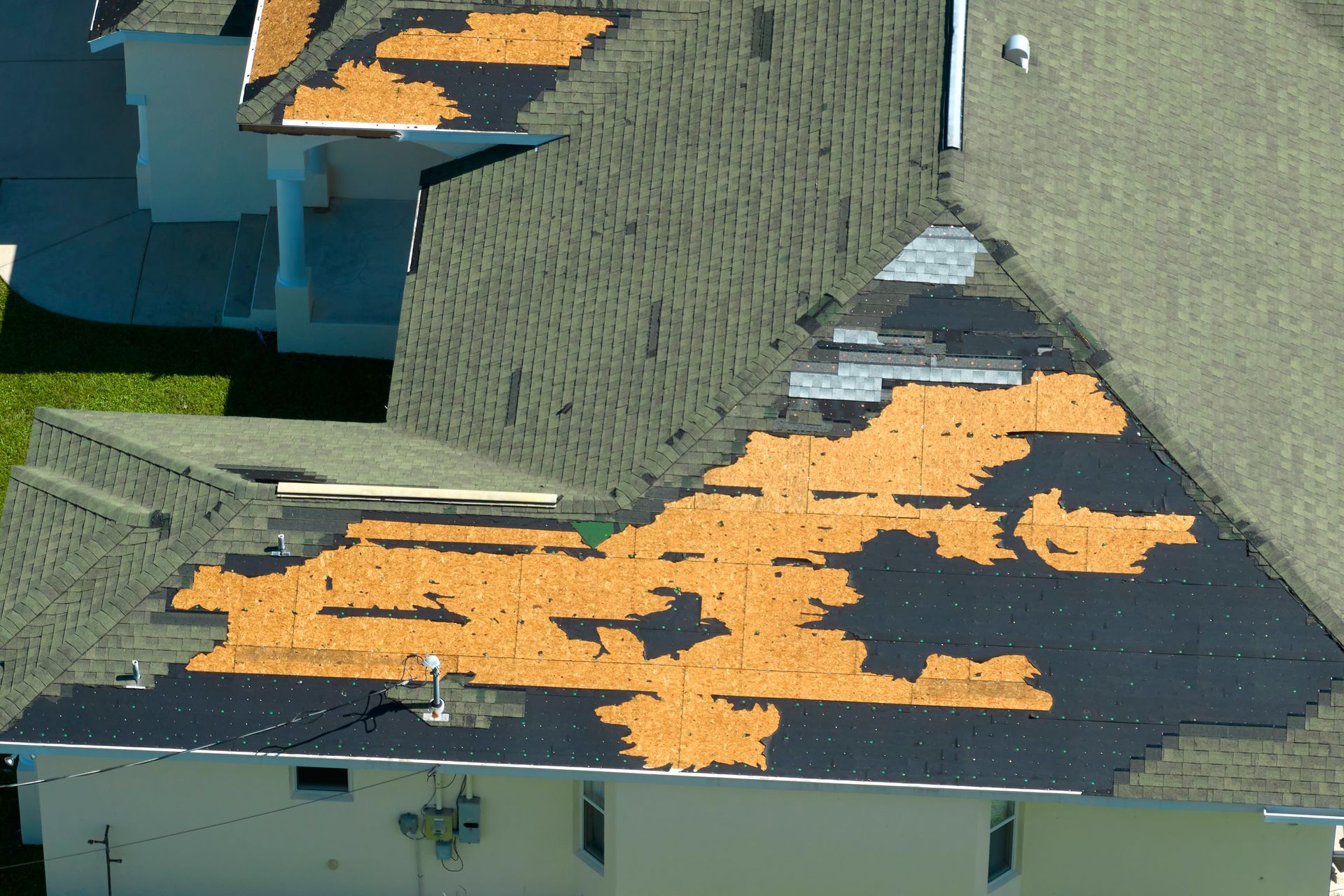
- Decking condition. We do not know what the plywood or plank sheathing looks like until the old roof is off. Rotted decking gets replaced, and we price it per sheet so you see exactly what changed.
- Coastal exposure. Houses south of Montauk Highway or out on the North Fork take salt-laden wind that goes after fasteners and metal flashing, so we specify accordingly.
- Chimneys, skylights, and penetrations. New step flashing and counterflashing at a chimney is real work. Reusing old flashing is where leaks come back.
- Access. Tight driveways, mature plantings, pools, and neighbors close to the property line change how we stage material and where the dumpster sits.
- Permits and disposal. Township permit fees and roofing debris tipping fees are line items, not surprises.
The two-layer rule on Long Island
This is the detail that decides the scope on a lot of older Long Island houses, and it catches homeowners off guard.
New York code allows a maximum of two roof coverings on a structure. If your home already has a second layer, meaning someone shingled over the original roof years ago, a third layer is not an option. The old material has to come off, which converts what you hoped would be a cheap overlay into a full tear-off.
We check this during the estimate by looking at the roof edge at the rakes and eaves, where layer count is usually visible. It is worth knowing before you collect quotes, because a contractor who bids an overlay on a house that already has two layers is either mistaken or planning to leave you with a code problem when you sell.
Even when a layover is legal, we rarely recommend it. Shingling over old material hides the decking, adds weight, traps heat that shortens shingle life, and voids some manufacturer coverage.
What we install: the full roof system
A roof is not shingles. It is layered components that only work together, and cheap quotes usually cut here rather than on the shingle itself.
- Ice and water shield at the eaves, valleys, and around penetrations. In our climate this membrane is what keeps ice dam backup from reaching the decking, and it is required at eaves in cold-climate construction.
- Synthetic underlayment across the remaining field, which outperforms felt and does not tear when it gets wet during a multi-day job.
- Drip edge at eaves and rakes, which directs water into the gutter instead of behind the fascia.
- Starter strip along the eaves, properly adhered, because wind uplift starts at the edge.
- Step and counterflashing at chimneys and walls, installed new rather than reused.
- Kickout flashing where a roof plane meets a wall, which is the single most commonly missing detail we find during tear-off.
- Balanced ventilation, meaning intake at the soffit and exhaust at the ridge. A ridge vent with blocked soffits does almost nothing, and poor ventilation is what cooks shingles from underneath and drives attic condensation.
Our replacement process
- Inspection and measurement. We get on the roof, check the attic where accessible, count layers, and look at ventilation and flashing rather than just the shingle surface.
- Written proposal. Material, full system spec, layer count, permit, decking repair pricing per sheet, warranty terms, and timeline in writing.
- Permit filed. We pull the permit with your township before work starts.
- Property protection and staging. Tarps over landscaping and siding, plywood where needed, dumpster placed to protect your driveway.
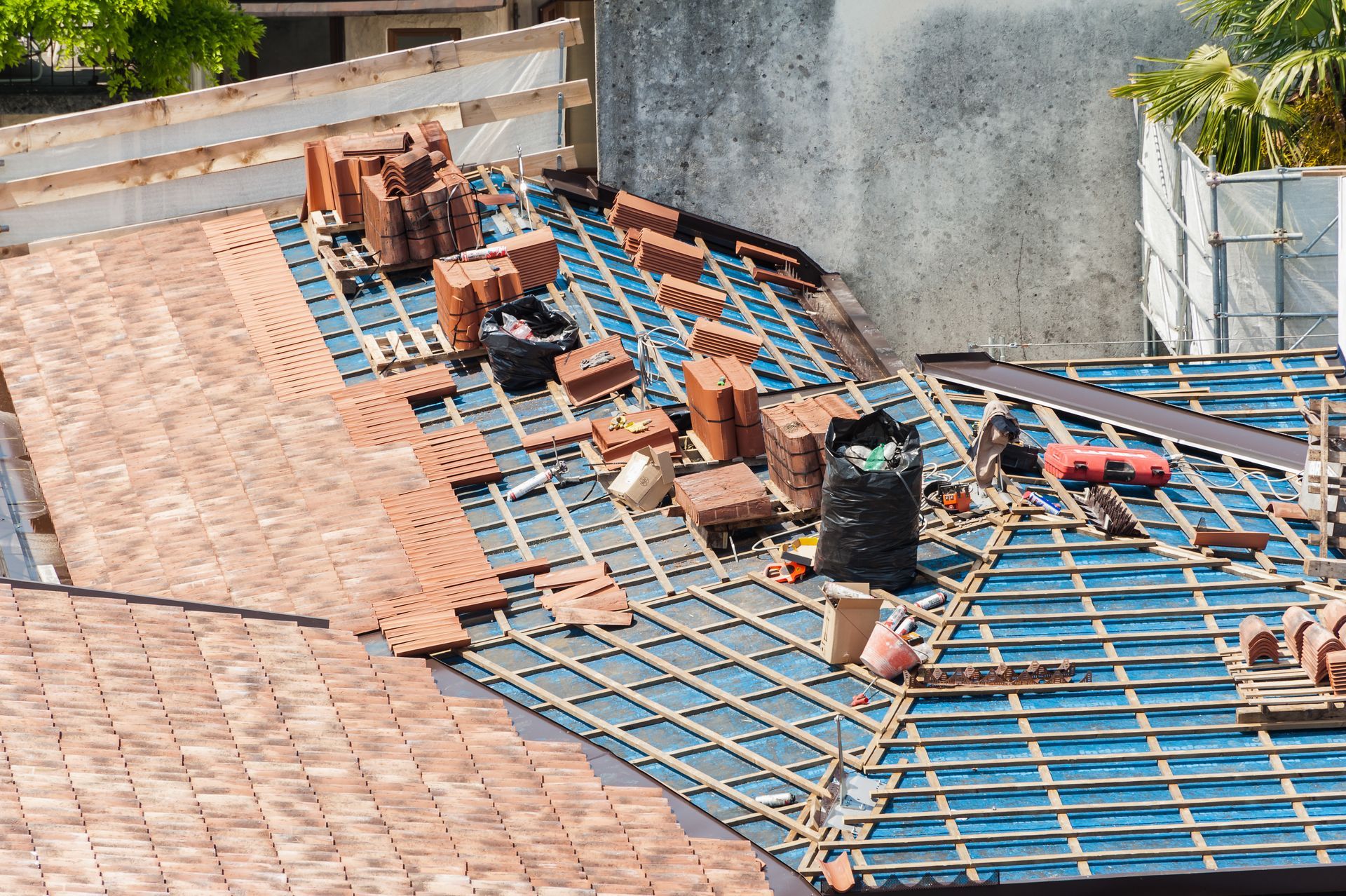
- Tear-off and deck inspection. Old material comes off to the deck, then we walk the sheathing and show you anything that needs replacing before we cover it.
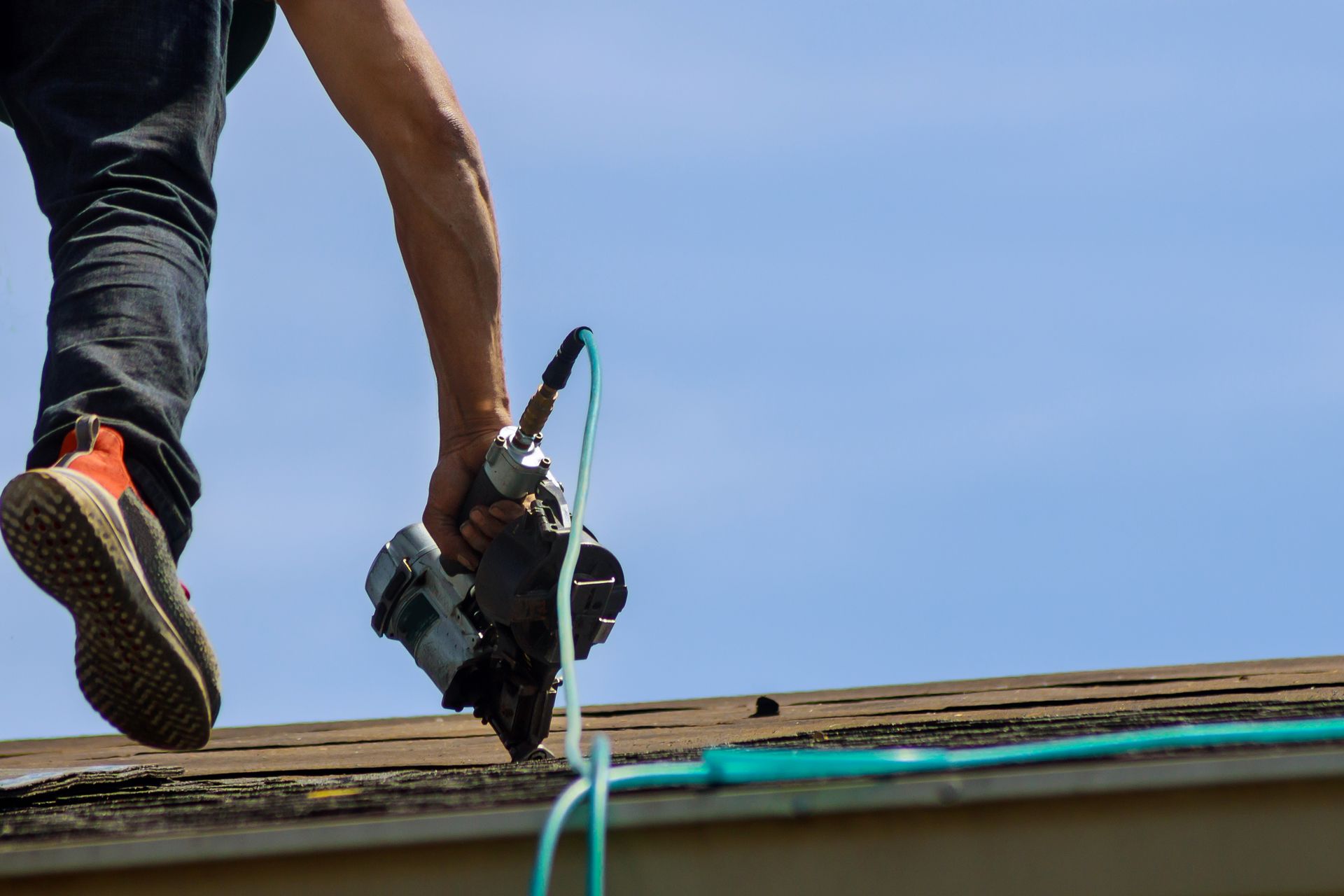
- System installation. Ice and water shield, underlayment, drip edge, flashing, shingles to the manufacturer's nailing pattern, then ridge and ventilation details.
- Cleanup and magnetic sweep. Debris hauled out, then a magnetic roller over the lawn, driveway, and beds, more than once.
- Final walkthrough and inspection. We review the finished roof with you and handle the township inspection.
Most single-family homes are a one to three day job. Complex rooflines, extensive decking replacement, or weather stretch that out, and we will not start a tear-off we cannot dry in before rain.
Permits and inspections
Roof replacements are permitted work in most Nassau and Suffolk townships, and requirements differ between Islip, Brookhaven, Smithtown, Huntington, Babylon, and the incorporated villages. We handle the filing and the inspection as part of the job.
A permit protects you at resale. Unpermitted work on a certificate of occupancy is the kind of thing that surfaces at the worst possible moment, during a buyer's title and survey review, and it is one reason to be cautious about a bid that comes in far under everyone else's.
Warranties worth asking about
Every roofer says the roof is warrantied. Get specific, with us and with anyone else you are considering:
- Manufacturer material warranty. Length, whether it is prorated, and what registration is required.
- Workmanship warranty. How many years, and what it covers. This is the one you are most likely to use, because the majority of premature roof failures are installation problems, not defective shingles.
- Whether it transfers if you sell, and what the deadline is for notifying the manufacturer.
- What voids it. Improper ventilation, layovers, and non-matching accessories all appear in the fine print.
Towns we serve
We work across Suffolk and Nassau from our Bohemia shop, including Bohemia, Ronkonkoma, Holbrook, Hauppauge, Smithtown, Commack, Bay Shore, Babylon, West Islip, Medford, Selden, Coram, Levittown, Hicksville, and East Meadow.
We also handle
roof repair,
flat roofing,
chimney flashing,
siding, and
gutters.
Get your estimate
We will measure the roof, check the attic, count the layers, and give you a written scope you can compare against anyone else's. If your roof has years left, we will say so.
Call
(631) 705-8817 or
contact us to schedule. You can see
recent projects, read
what homeowners say, or look at
financing options if you want to spread the cost out.
Roof replacement FAQs
How long does a roof replacement take on Long Island?
Most homes are one to three days. The variables are roof complexity, how much decking needs replacing once the old roof is off, and weather. We plan tear-offs so the deck gets dried in the same day.
Can I put a new roof over the old shingles?
Only if your home currently has a single layer, since code caps you at two coverings. Even then we usually advise against it, because it hides the decking, adds weight, and shortens the life of the new shingles. Our walkthrough of the roof replacement process explains what a proper tear-off includes.
Will my homeowners insurance pay for a new roof?
Insurance covers sudden damage from a covered event such as wind or a fallen tree, not wear and age. Many New York policies now settle older roofs on an actual cash value basis, meaning depreciation comes out of the payment. Document damage with photos right away and get an independent inspection before you accept an adjuster's scope.
How do I know whether I need a replacement or just a repair?
Age, how widespread the problem is, and whether the decking is sound. Isolated damage on a roof under 15 years old usually repairs well. Multiple leaks, widespread granule loss, or a sagging plane point to replacement. We break the decision down in roof repair versus roof replacement.
What is the best time of year to replace a roof here?
Late spring through fall gives the most reliable shingle sealing and fewer weather delays. We replace roofs year-round, and in cold weather we adjust by hand-sealing where the manufacturer calls for it, since asphalt needs warmth to bond on its own.
Recent Posts